
In 2025, bonds have reemerged as a cornerstone of prudent portfolio construction—not as relics of a low-rate era, but as high-yielding, low-volatility assets offering real income for the first time in over a decade. With U.S. Treasury yields near 5% and credit markets pricing in a cautious economic outlook, the best bond investments prioritize quality, duration discipline, and inflation resilience—not just headline yield.
- U.S. Treasury Securities (Bills, Notes, and TIPS)
Backed by the full faith of the U.S. government, Treasuries remain the global benchmark for safety. In 2025:- 1- to 3-year Treasury bills yield 5.0–5.3% with near-zero credit risk
- TIPS (Treasury Inflation-Protected Securities) offer principal adjustments tied to CPI—ideal if inflation remains sticky
These are ideal for capital preservation, emergency reserves, or laddered income streams.
- Short-Duration Investment-Grade Corporate Bond ETFs
Funds like Vanguard Short-Term Corporate Bond ETF (VCSH) or iShares Investment Grade Corporate Bond ETF (LQD) provide diversified exposure to high-quality companies (BBB+ or higher) with maturities under 5 years. They currently yield 5.0–5.8% with minimal interest rate sensitivity—making them suitable for conservative growth or income needs. - Municipal Bonds (for Taxable Accounts)
For investors in higher tax brackets, short-to-intermediate municipal bonds offer tax-exempt income equivalent to 6–7%+ in pre-tax terms. ETFs like Vanguard Tax-Exempt Bond ETF (VTEB) provide instant diversification across states and sectors, with low default risk in general obligation and essential-service revenue bonds.
- Long-duration bonds: Sensitive to rate hikes; a 1% rise can erase 10%+ of principal value in 10+ year bonds
- High-yield (junk) bonds: Default risk rises sharply in slowing economies; spreads widened in late 2024
- Bond funds with hidden leverage or complex derivatives: Can amplify losses during liquidity stress
Strategic Use in a Portfolio
Bonds aren’t just for retirees. In 2025, they serve three critical roles:
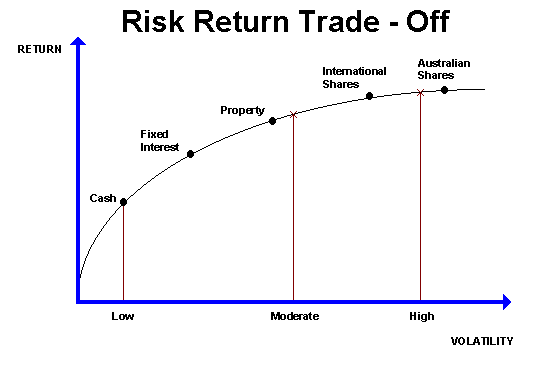
- Stabilizer: Reduce overall portfolio volatility during equity drawdowns
- Rebalancing fuel: Enable buying equities at discounted prices during market stress
- Income anchor: Provide predictable cash flow without selling growth assets
At ValueFinity, we typically allocate 15–30% of conservative portfolios to high-quality, short-duration bonds—adjusting based on real yield levels and recession risk.
Conclusion
The best investments in bonds today are not about chasing yield—they’re about securing real, risk-aware income in a complex macro environment. By focusing on short duration, high credit quality, and tax efficiency, investors can harness bonds as a powerful tool for both safety and strategic advantage.
For institutional-grade fixed income strategies integrated with global asset management, visit valuefinity.com or reach us at Capital@valuefinity.com .
